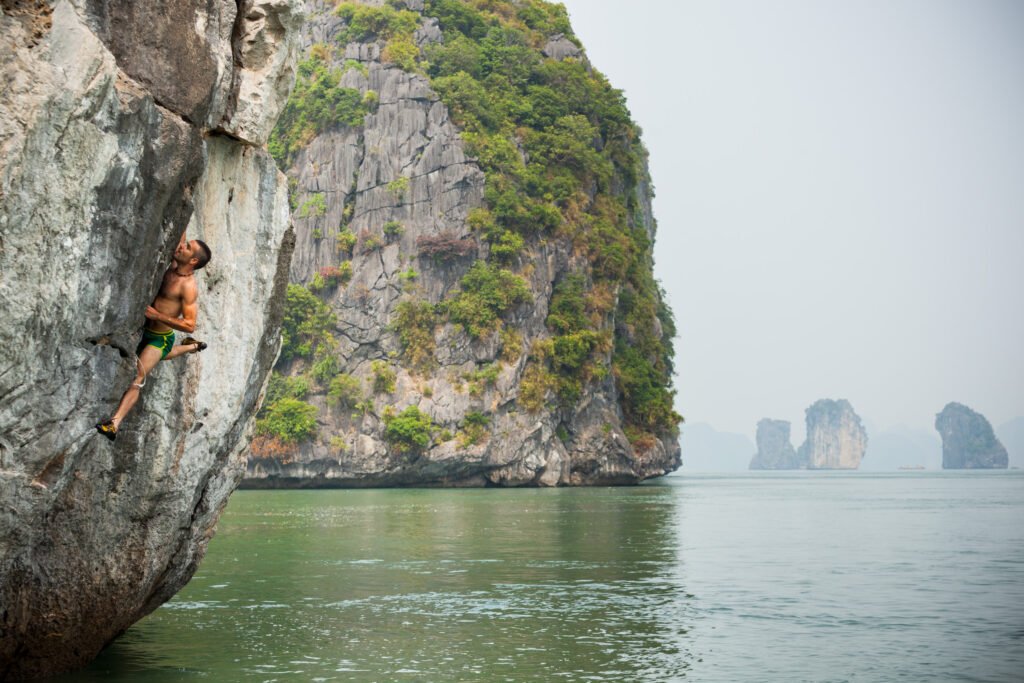
Rock Climbing in Vietnam
A Climber's Guide
Vietnam has some seriously good limestone climbing, from quiet mountain valleys and rice fields to dramatic sea cliffs scattered across Lan Ha Bay. For most visiting climbers, there are two main areas to know about:
- Huu Lung — primarily sport climbing, with single-pitch and multi-pitch routes
- Cat Ba & Lan Ha Bay — deep water soloing, sport climbing, multi-pitch and a few trad routes
They offer very different experiences. Huu Lung has a peaceful countryside feel, while Cat Ba and Lan Ha Bay combine climbing with islands, beaches and turquoise water. If you have enough time, climb in both. If you don’t, choose based on your preferred climbing style, atmosphere and travel plans.
A Note on Card Payments in Vietnam
Credit card payments are still not widely accepted in Vietnam, especially outside major cities. However, bank transfers are now extremely common, even in rural areas, and apps such as Wise, Revolut and Moreta Pay can make this surprisingly easy.
If you’re heading into more remote areas, though, don’t rely entirely on digital payments. Bring enough cash in Vietnamese đồng (VND) and withdraw cash from ATMs in cities or towns before you leave.
At A Glance
Huu Lung
Cat Ba & Lan Ha Bay
As of 2026
Grades: 4+ to 8c/9a
Grades: 3+ to 8c+/9a
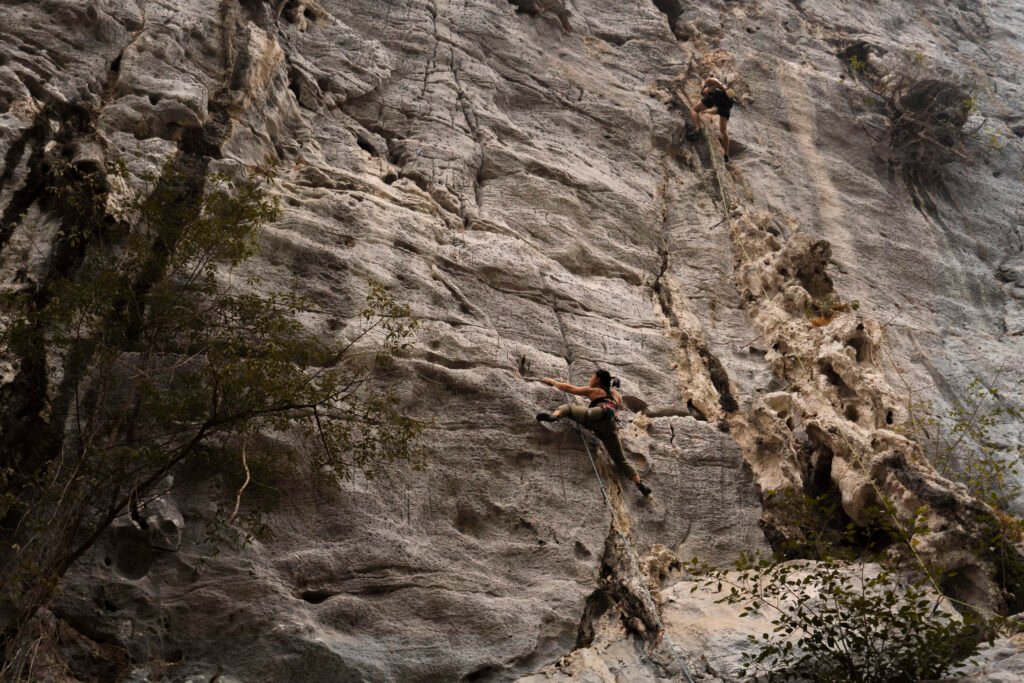
When to Climb in Vietnam
For sport climbing, the main climbing season is roughly October to April, when conditions are generally more suitable.
Deep water soloing is possible year-round, although August and September are more prone to rain.
As always in Vietnam, weather can be unpredictable, so check the forecast before heading out—especially if your plans involve boats.
Guidebooks & Online Resources
The main guidebook is Vietnam Climbing by Luca De Giorgi & Gavi Piper, published in 2023. It is available online and at Vietclimb’s bouldering gym in Hanoi and their homestays in Huu Lung.
Newer crags and routes that aren’t included in the guidebook can also be found on theCrag.com.